



Trademark scams are real, and the scammers are finding more and more clever ways to trick brand owners. Here are our top tips for identifying and dealing with scammers.
- Know that everything you file related to a trademark at the USPTO is in the public records.
- Use an attorney when you’re filing a trademark application, and to give you guidance about scams. An attorney can act as a buffer by being listed as the primary contact.
- If you’re scammed, report it to law enforcement to help gain momentum for a crackdown on scams.
- If you receive or learn about a scam, share it with your attorney so that they can advise you about it and stay up to date on the latest tools that scammers are using.
- If you receive a solicitation or communication about your trademark that’s not from your counsel, carefully examine the sender details.
- Be aware of acronyms other than USPTO in any correspondance.
- Look out for misuse of the USPTO’s name and logo.
- Look at the address. If there’s a return address on the envelope or an address asking for money to be sent to. The USPTO address is in Alexandria, VA. Anything related to a trademark that’s coming from an address other than that is definitely not from the USPTO.
- Look at the fine print. That’s where the secret is often hidden—that this is bogus scam, requesting money for something that’s not necessary.
- Check your trademark renewal dates and keep track of them. Many scams send out fake renewal dates and attempt to collect money well in advance of when a renewal can even be filed.
- Beware of offers to publish your trademark in any sort of directory. When you apply for a trademark at the USPTO, you’re automatically in the USPTOs directory, and that’s the only one that matters. All publication offers are scams.
- Don’t put your phone number in the USPTO records. It’s not a requirement. These are public records. Scams come by telephone as well.
- Don’t put your home address in the USPTO public records. These are public records that scammers can crawl into and pull all of the information. You do not want your home address in there.
- Calls from anyone claiming to be from the USPTO that ask for money over the phone are scams. The USPTO is never going to ask for money over the phone. They can not take your money over the phone.
- Read about the USPTO’s own resources on trademark scams and solicitations. They have examples and information at uspto.gov.
- Check our firm’s free resources at isthisatrademarkscam.com.
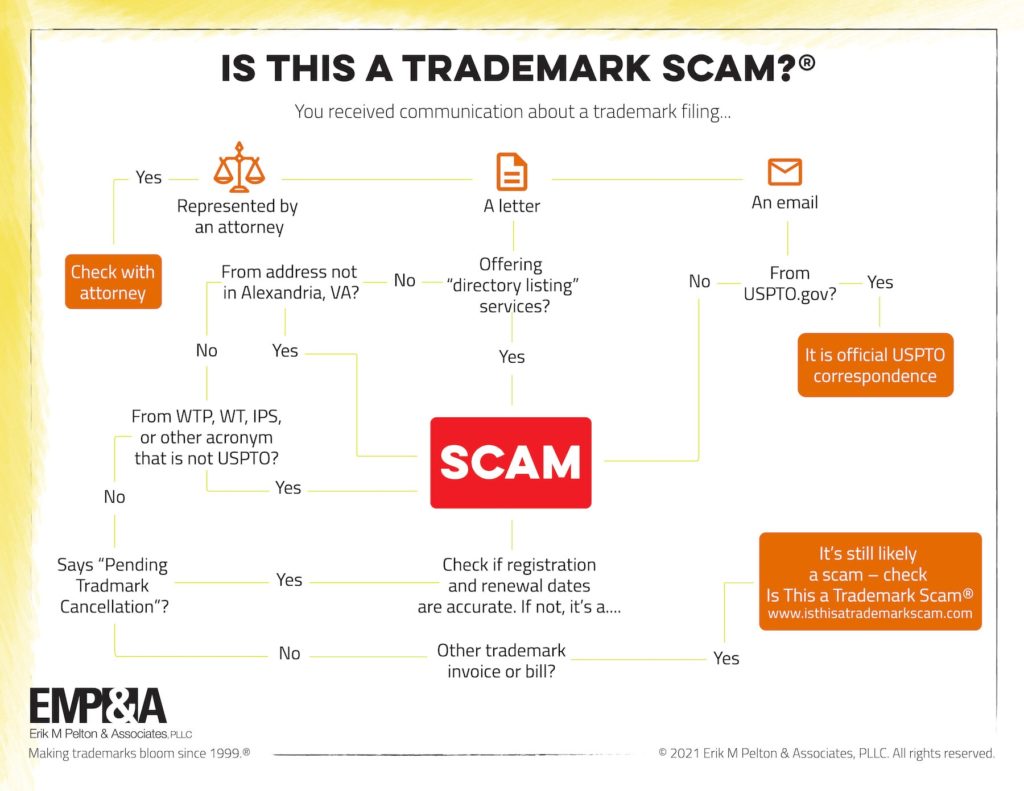
- Use the trademark scam decision tree to help you analyze and categorize whether it is a scam.
- Read my American Bar Association article titled The Growing Threat of Trademark Scams, where I break down scam specifics and examples.
- If you are an attorney who files trademarks, regularly search your own name in the USPTO records to make sure that other people aren’t falsely using your name to represent someone else. This is a terrible scam that unfortunately really happens.
- Speak up. Tell the USPTO you want to see them do more to combat scammers: more resources, more ideas, more education, more warnings.
- Follow @empatrademarks on social media: Instagram, LinkedIn, Twitter, TikTok, YouTube. We report on the latest scams regularly—like, subscribe, and comment to stay alert and in the loop.
- If you receive an email or phone call that alleges to be from the USPTO that seems suspicious, you can use the USPTO employee search function to look up the employee and call them back, because scammers might actually be using real employees names. You can call the employee’s actual desk to double check if you spoke to them or if there’s something suspicious going on.
- Verify any trademark fee requests with the USPTO’s current fee schedule. The USPTO is never going to ask for fees over the phone, but if you do get a request for fees, find out if that fee correlates to the USPTO’s filing fees.
- Online filing services claiming to help with the trademark application process are not the same as working with a law firm and do not offer the same type of service and guidance—and some of them may be involved in scams.
- Subscribe to the IPelton blog. You’ll get email updates with the latest information about scammers.

